Achieve Perfect Results with the Pit Stop Team

The Schwarzwald-Baar-Heuberg industrial region has the highest density of companies in Germany specializing in machining technology. Historically, the region’s technological alignment has been strongly shaped by turning technology, which has been refined here over generations. As a result, highly complex products are now manufactured with the application of virtually all major metalworking processes—practically ready for installation and with traceability in terms of quality. Key components of the sustainable success of the region’s companies are passion and ingenuity, as well as a deeply rooted, uniquely local culture of continuous improvement. Here, good is never good enough!

Precision in Record Time

Lauble, a company based in Dunningen in the Rottweil district and run by two generations of the founding family, is one of these companies that have shaped the region and embodies this tradition in an especially compelling way. Here, through continuous review of cost-effectiveness and new technical options, potential for improvement is consistently detected and realized with the help of the right tools. 

“Precision in Record Time” is Lauble’s motto, showcased on its website with the company’s own employees acting as a pit stop team. This team consistently tackles setup and non-productive times to optimize productivity and delivery times. For over 15 years, ZOLLER has been a partner in enhancing efficiency at Lauble and, following the successful introduction of tool settings in ZOLLER’s proprietary horizontal orientation several years ago, has now also supported the digitization of tool management. Together, they have achieved significant cost savings, process improvements, and streamlined workflows.

The finished part from a single source 

Lauble’s story is typical of the region’s manufacturing industry. Founded in 1965 as a turning shop in a local garage, three generations have developed the company into a technology firm with 50 employees and a state-of-the-art production facility featuring 31 machines across a total area of over 3,000 square meters. Using modern short- and long-bed automatic lathes, parts are manufactured in batch sizes usually ranging from 500 to 100,000 pieces for various demanding applications. Drawing on all the experience and expertise of a turning specialist, the company produces high-precision, complex parts made of stainless steel, aluminum, steel, brass, and even plastic for drive technology, mechanical engineering, medical technology, and the electrical industry. Lauble offers the finished part as a one-stop solution, including all finishing, surface treatment, and selection performed in-house.

Significant potential for savings and optimization

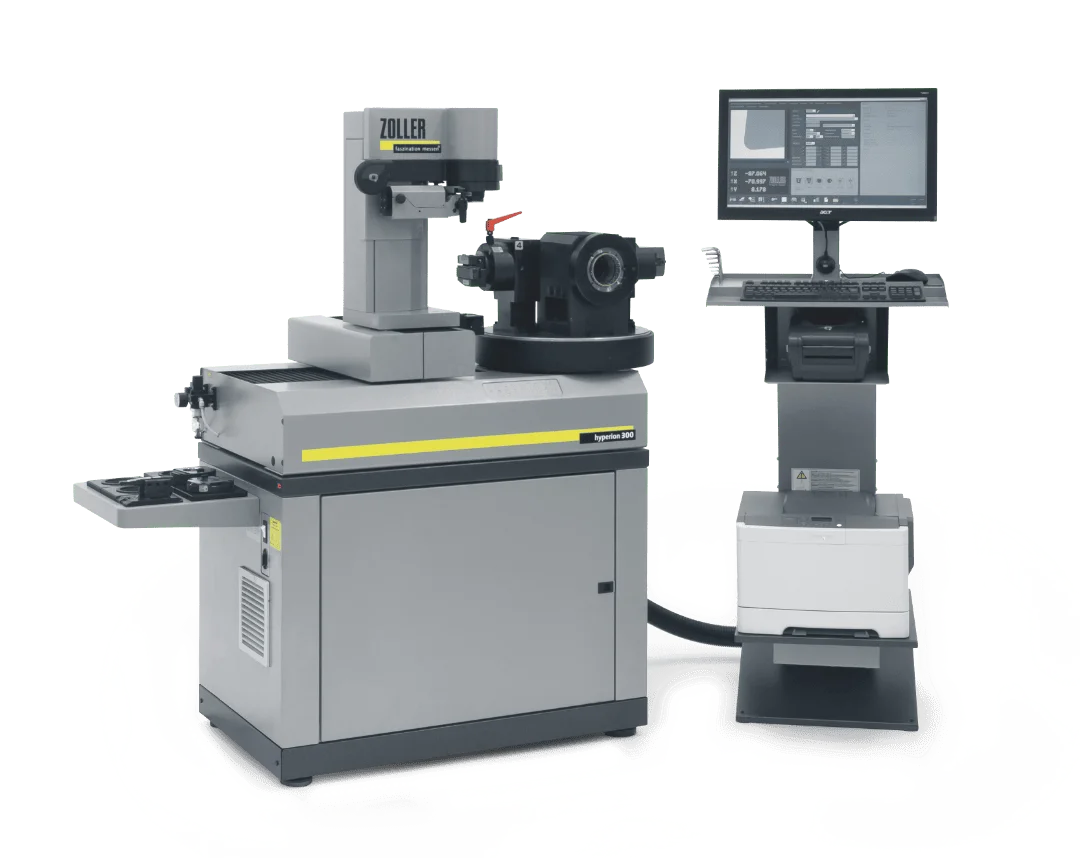
As an experienced manufacturing expert, Managing Director Sascha Auber intuitively knew that there was significant potential for cost savings and optimization in professional presetting & measuring. While working as a technician in 2004, he investigated this potential and was able to confirm his hypothesis with hard data. Preset tools in general—and especially at Lauble on the numerous indexing machines of the ABC and C series—have an especially significant impact on setup times and machine availability. It was therefore clear that a professional presetting machine was an essential component of modern manufacturing at Lauble. The decision was made to use a »hyperion« presetting and measuring machine from ZOLLER. 

For a turned parts manufacturer, the device is the ideal choice thanks to its horizontal clamping configuration and the wide range of options tailored to turning operations. ZOLLER is the only supplier on the market that offers horizontal presetting machines and has continuously refined this technology. With the option to precisely adjust the center height or the optional additional Y-axis for measurement of tools on multi-tool holders or off-center tools, as well as special adapters from lathe manufacturers, ZOLLER offers functions derived from the day-to-day operations of turned parts manufacturers that are especially useful and time-saving. 

At Lauble, the initial focus was on the concrete cost savings achieved by removing tool settings from stock. And the results were impressive: with a reduction in setup times of around 40%, the cost of the presetting machine paid for itself in less than half a year and now consistently generates significant savings. These savings stem from the fact that the machine spends far more time cutting. When exchanging non-preset complete tool assemblies—that is, the tool and holder—the machine takes a long time to manually find the tool’s position by “scraping” against the workpiece. This involves moving the tool toward the workpiece. If the tools are preset in advance, the machine can resume machining much more quickly after a tool change. The bottom line is that the machine requires less time to produce the same part, which naturally allows for faster and more cost-effective production.


Working with ZOLLER, we have taken steps to gradually increase efficiency in our manufacturing operations, with ever-greater results, without having to restrict day-to-day operations.

Sascha Auber Managing Director, Lauble GmbH

Adjust with ease

It quickly became clear that the »hpyerion« was more than just an investment aimed at reducing non-productive time. Inspired by the ease with which Sascha Auber now measures tools on the presetting machine himself, even the employees—who had previously sworn by the tried-and-true “scratching” method—soon let go of their reservations. The transition was also made easier by the fact that the tools are measured in their familiar horizontal position. As a result, acceptance was high within a short time, and day-to-day work became easier for everyone involved. Today, it seems unimaginable to carry out the complex setup procedures without external measurement. 

Further Potential in Tool Management 

This was exactly the type of optimization the Boxenstopp team was searching for a few years later. It made sense to explore further potential in tool management as part of this initiative, which was launched in 2018. What options would there be for entering and storing the countless tool components in such a way that search times are virtually avoided and the stock is always visible? What if the measured tool data could be transferred directly from the presetting machine to the machine without any manual steps? And how could the tool data be best utilized for Index’s VirtualLine virtual machine, which assists with programming, simulation, and optimization?

Florian Kreuzberger explored these questions; as an executive assistant, he has a good overview of the company’s key financial metrics and metrics that correspond to them for optimization. However, when you see this law graduate setting up tools or working at the tool management workplace these days, he comes across as a seasoned professional in the tool room. 

The starting point for these considerations was the obvious potential for improvement in the tool room and during setup. “Of course, we have different batch sizes, and the following example calculation is on the conservative side: Assuming we set up 50 tools per day, consisting of 125 individual components—even if it takes only 90 seconds to search for each complete tool, including all components, that adds up to a pure search time of 75 minutes per day. And that’s already a very optimistic estimate, since our tool room was tidy but not organized consistently enough,” said Kreuzberger. 

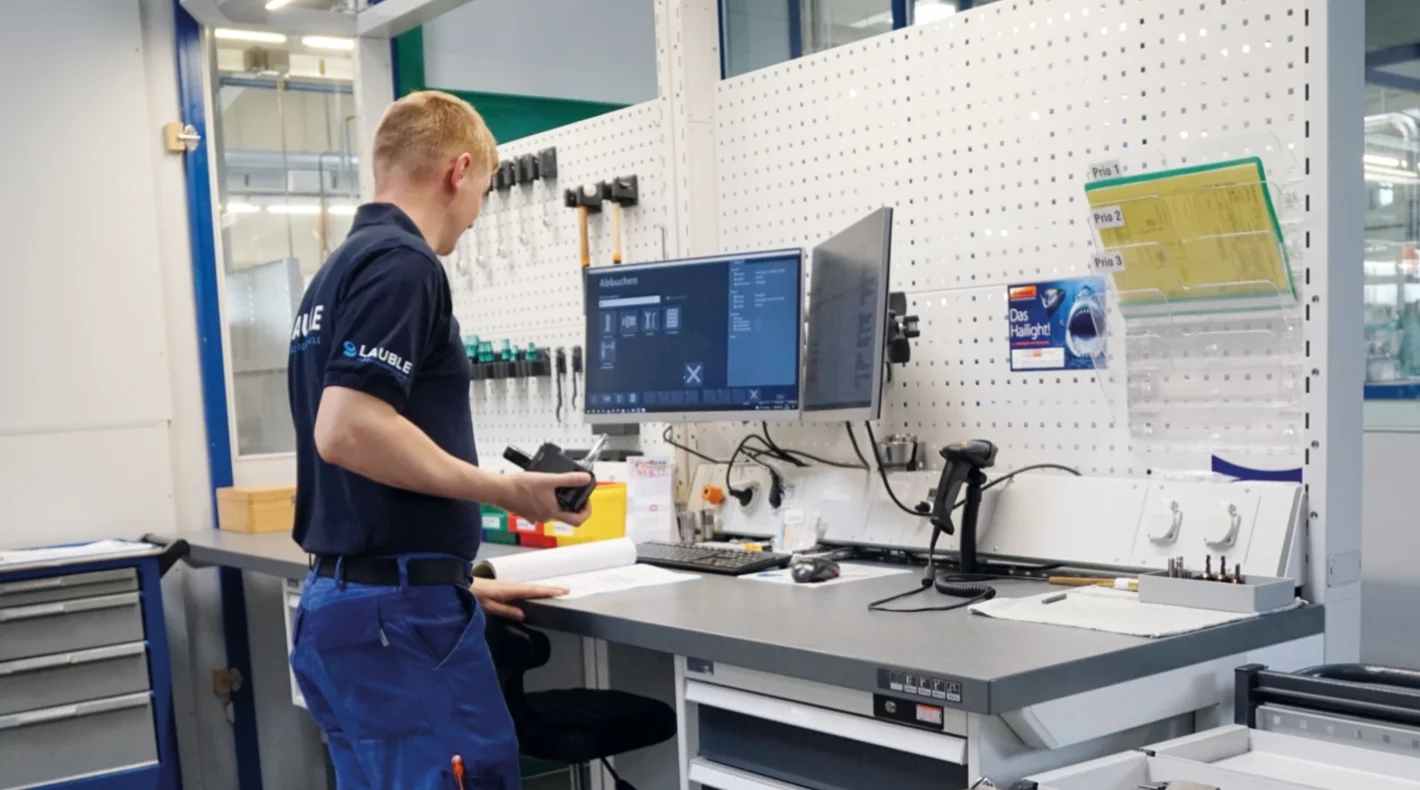
The plan was placed relatively quickly: Electronic cabinets should be purchased for tool storage, tool lists should be standardized, and tool assembly should be handled by a central point of contact instead of by each individual set-up technician as had been the case previously. The entire system should be linked using professional tool management software.

ZOLLER TMS Tool Management Solutions

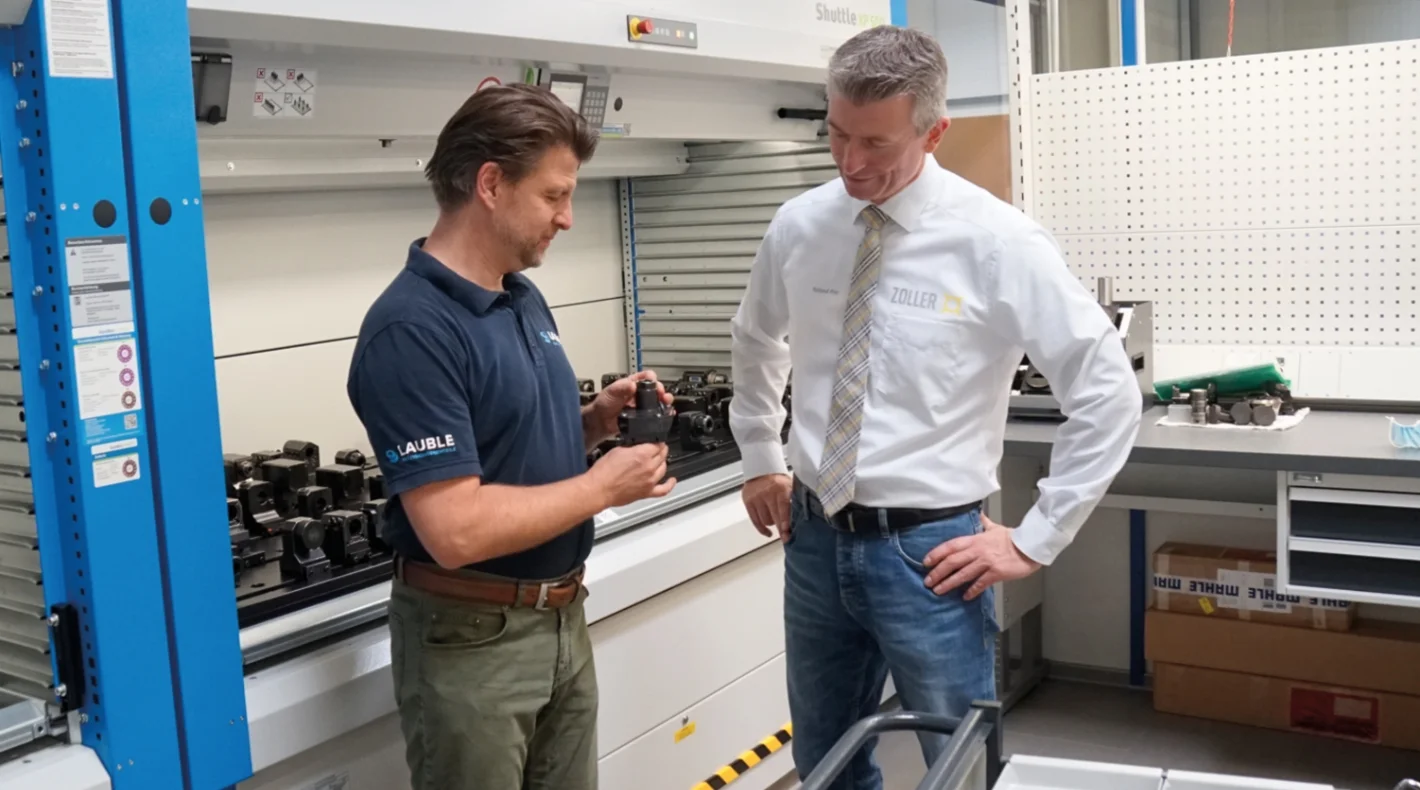
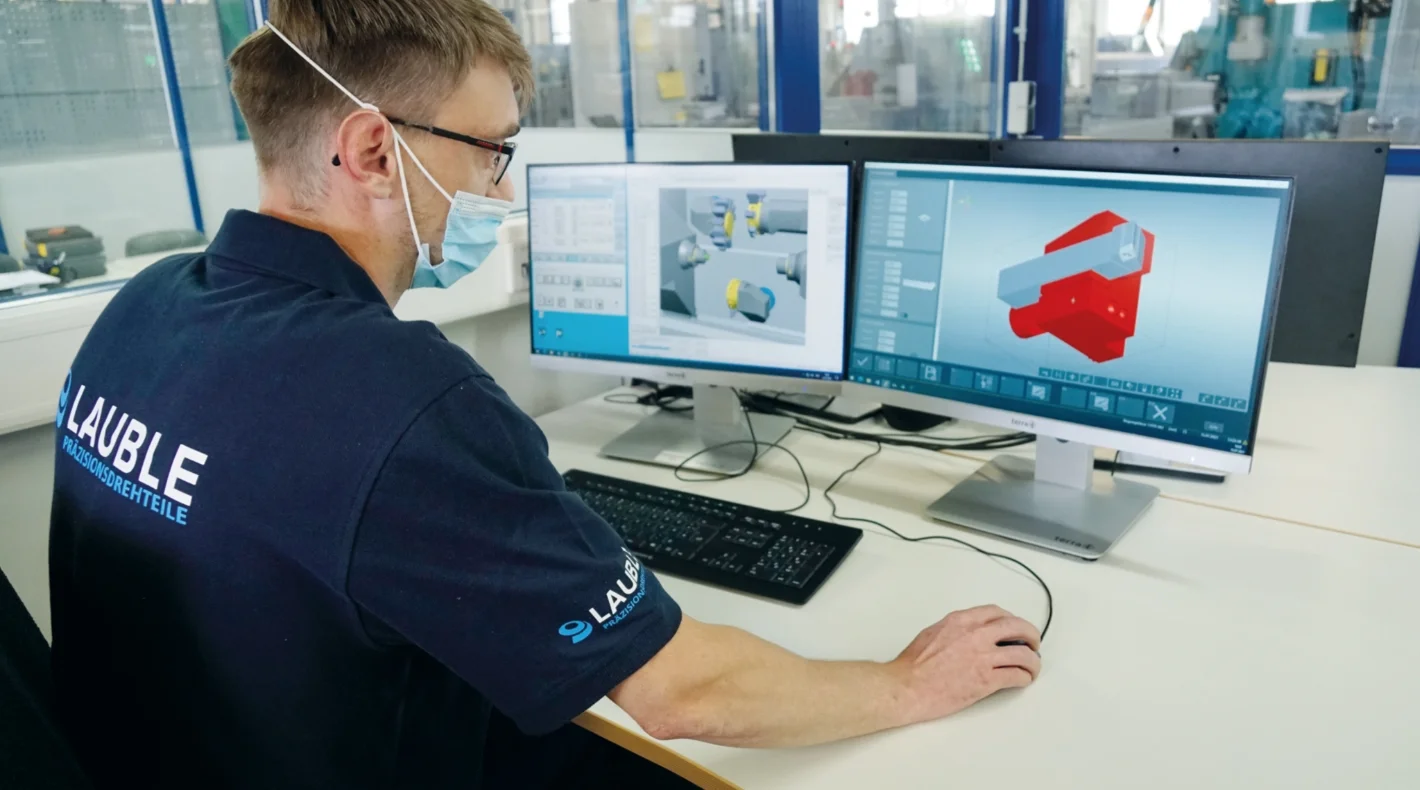
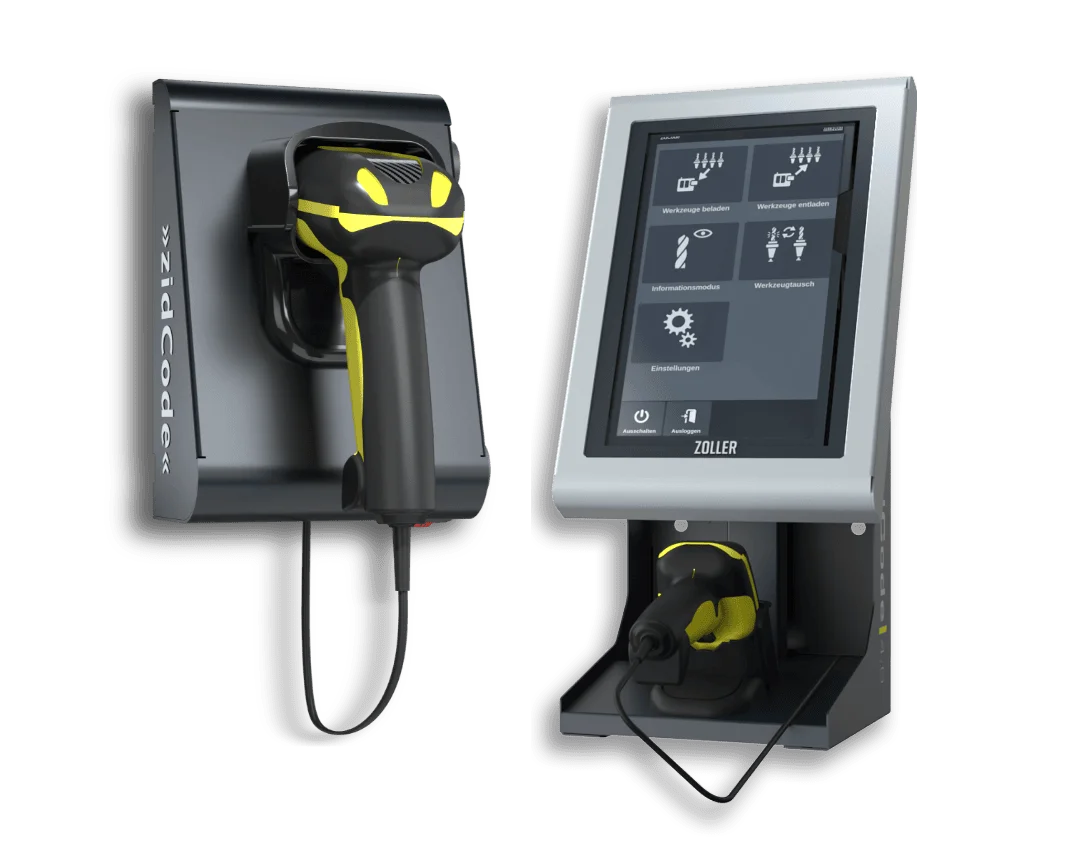
ZOLLER had the solution. With the SILVER package from TMS Tool Management Solutions, Lauble gained all the options needed to place a well-organized, state-of-the-art tool and stock management system. These pre-configured interfaces were available for the planned Kardex storage lift, ZOLLER’s user-friendly storage location management, centralized management of tool data records, components, and article characteristics in accordance with DIN 4000, the management of setup sheets, and data import to the machines. To ensure that the digital twin of the Index machines, complete with measured 3D tool data, could be fully used within the software, ZOLLER developed the software interface as part of the project. 

In laying the groundwork for this significant step in Lauble’s manufacturing process, ZOLLER provided support through appropriate training and solution approaches. Kreuzberger: “Above all, setting up the tool data system was a headache for us at first. Although our tool suppliers were able to provide us with all the data, the task of creating all the components in the system—and in 3D, no less—seemed like a mammoth undertaking to us. While milling shops can work with far fewer components and simpler contours, we turners have to create complex data. 

At first, we had the impression that ZOLLER’s software was very much geared toward rotating tools and that we would have to spend an immense amount of time on data entry.” However, this issue was quickly deactivated in collaboration with ZOLLER: “To a certain extent, data entry always involves some cleanup and systematization, but it pays off many times over,” says Felix Kammer, who oversees the process at Lauble on the ZOLLER side. “There are always special considerations that need to be taken into account, but fundamentally, our software allows us to define any tools, components, and article characteristics in accordance with standards, thereby ensuring seamless exchange with third-party systems.” 

This only requires training, which provided the Lauble staff responsible with the necessary knowledge, safety, and speed. “We thought we’d spend at least half a day on each tool, but during the training we quickly learned how to fill the DIN 4000 structure in the ZOLLER TMS with data from the Tool manufacturers.” After that, it was simply a matter of implementation. Feasibility and efficiency were already assured.

Step by Step Toward Greater Efficiency 

Sascha Auber and Florian Kreuzberger want to build on what they’ve achieved: “Working with ZOLLER, we’ve brought greater efficiency to our production step by step with increasing impact, without having to restrict ongoing operations. Simply working in a perfectly organized tool room and conducting targeted optimization with virtual tools make our forward-looking strategy tangible for both employees and customers,” says Sascha Auber. 

Florian Kreuzberger adds: “The savings in setup times—both from being able to locate tools more quickly and directly at the machine thanks to external tool measurement—are impressive. And through our close exchange with ZOLLER, we’re constantly discovering new options for optimization that we certainly don’t want to miss.” Currently, ZOLLER’s automation solutions for the tool preparation process are under consideration; these can be implemented quickly and simply based on the existing infrastructure.