Nikolaus relies on precise ZOLLER measuring technology

ZOLLER setting and inspection devices are ideal for measuring and optimizing special tools at tool grinder Nikolaus Grinding Tech GmbH & Co. KG in Kirkel, Saarland. Founded in 1992, the tool grinder continues to follow its original mission statement and business concept to this day.

Cost-effective quality assurance

Another factor was that many customers in the region were already using ZOLLER measuring and adjustment equipment. This allows us to align our quality control with our customers’ incoming inspection procedures. Furthermore, customers trust us much more quickly when they know that we measure and test our tools according to the same criteria as they do, using the same measuring and inspection equipment»,” explains Katja Nikolaus. «

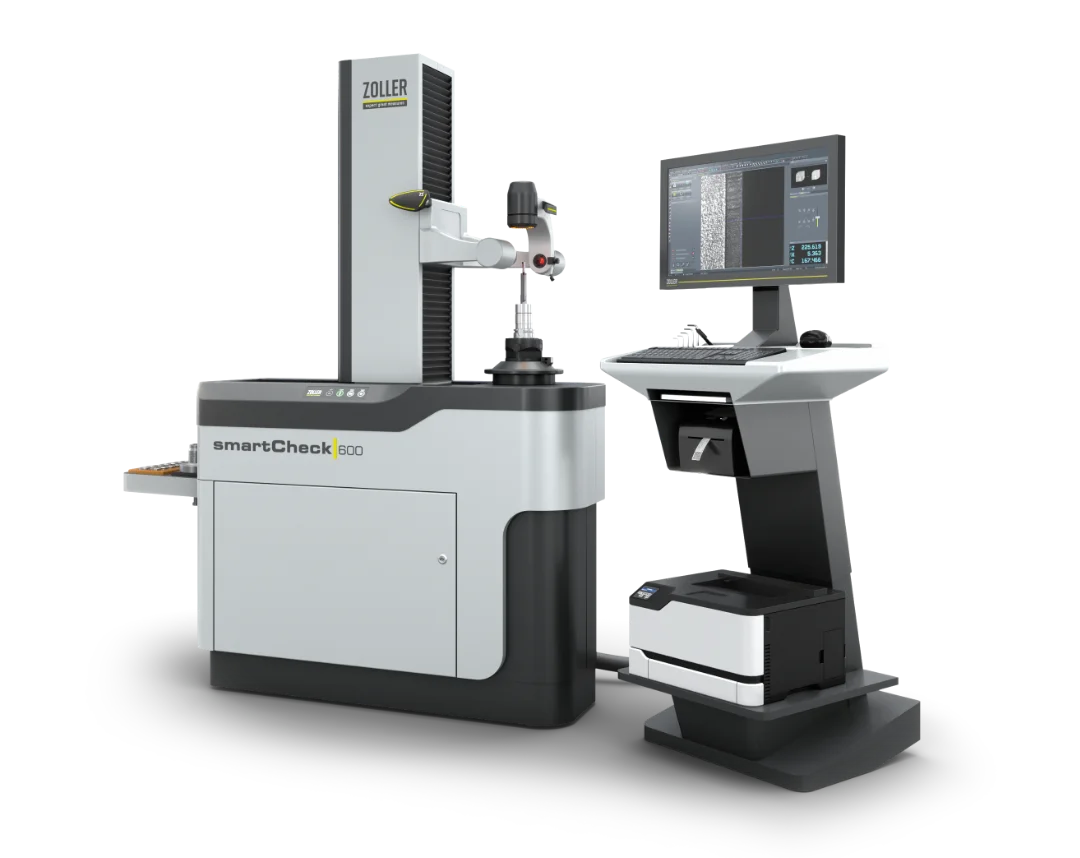
Due to the positive experiences with the »genius« measuring machine, the tool grinder in Kirkel invested in a »smartCheck« universal inspection and measuring device in 2016. This made it possible to measure much larger tools. The specialists also appreciate the device’s ease of use. Furthermore, it is very flexible. 

The »pilot« software includes measurement cycles for a wide variety of geometries. The operator simply has to select the appropriate symbol (icon) on the large touchscreen. The measurement cycle then runs fully automatically. The measuring device displays the geometry to be measured—for example, a cutting edge—on the enlarged screen and records the data. This data is saved as a data set and, if desired, documented in a report.

Customizable and flexible 

Tool grinders also use the »smartCheck« measuring device to optimize the grinding of special tools. They measure individual geometries, immediately detect deviations from the geometry specified in the prescription or template, and adjust the configuration parameters on the grinding machines. According to Dirk Forster, a tool grinder at Kirkel, this allows him to grind the special tool that corresponds exactly to the specifications in just a few steps. This is crucial for achieving short cycle times and maximum flexibility, especially when dealing with individual parts and small series of custom tools. Thanks to rapid measurements and fully automated processes, we obtain concrete and reliable data in a very short time. We use this data to optimize the sharpening programs and, in this way, quickly sharpen tool geometries that correspond exactly to the drawing specifications», reports Dirk Forster.«


Reliable and accurate

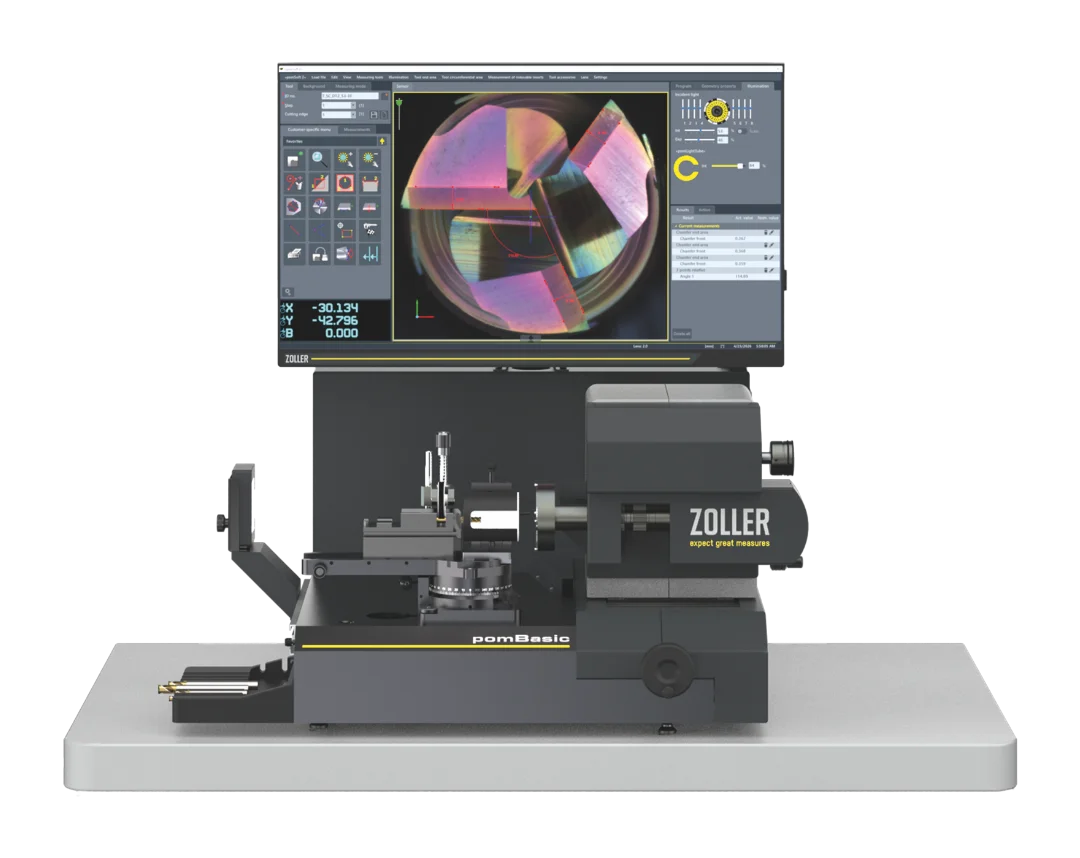
As Dirk Forster confirms, measurements taken with »the pomBasicMicro« are significantly better than those obtained using the microscope previously employed. We can work reliably and accurately, regardless of the skill and care of the staff. Furthermore, we can measure at high speeds. That wasn’t possible with the microscope», explains Dirk Forster. «

Evaluation of microgeometries 

As an additional advantage, the »pomBasicMicro« inspection device offers optical inspection of ground surfaces. This applies not only to cutting edges and tips but also to chamfers and grooves on small drills and milling cutters. Dieter Müller comments: “In the measuring device, it is possible to rotate and swivel the clamped tools almost at will, as well as focus on different positions of the tool. This makes it possible to view all types of surfaces and individual geometries on the magnified screen.” 

This also makes it possible to identify scratches, gouges, and chips caused by improperly adjusted grinding wheels or unsuitable abrasives.» At Nikolaus Grinding Tech in Kirkel, tool sharpeners use these functions of the inspection device to, for example, optimize the groove path on the stepped levels with diameters of just 0.3 and 1 mm, as well as the angle on the level.«

Develop, refine, optimize

Nikolaus Grinding Tech, a tool grinding company based in Kirkel, currently operates five tool grinders under the leadership of Katja Nikolaus, Nathalie Schmieden, and Elisabeth Nikolaus, serving as a highly qualified partner to the regional manufacturing industry. 

The specialists develop sophisticated special-purpose tools (with diameters ranging from 0.1 to approximately 32 mm) using 3D CAD/CAM systems and grind them on high-quality 5-axis tool grinding machines (Anca). To optimize the grinding processes in advance, they are dynamically simulated in the CAD/CAM systems. When it comes to the sharpening and grinding of special tools, the experts in Kirkel support their customers with comprehensive technical service. 

Thus, based on their specialized knowledge and experience, they suggest various improvements to cutting edges, chamfers, and groove geometries to increase the service life of special tools and optimize process reliability. They also contribute to improving manufacturing processes as a whole, for example, by integrating additional manufacturing steps into a multi-level tool or by adapting tip and cutting geometries to minimize burr formation during drilling and milling.


The collaboration with ZOLLER has proven particularly beneficial, not only from a technical standpoint but also from an economic one.

Katja Nikolaus address

The five specialists in Kirkel manufacture high-quality special tools within a very short time, either as individual items or in small series of up to around 500 tools per order batch. Following the sudden death of the company's founder, Katja Nikolaus has been running the business decisively and energetically for the past three years together with her sister Nathalie Schmieden and her mother Elisabeth Nikolaus. She reports that the tool grinder is highly valued by medium-sized and larger manufacturing companies in the Saarland, Rhineland-Palatinate, Hesse, and Baden-Württemberg regions for its flexibility, reliability, and short response times. "The measuring, setting, and inspection devices from ZOLLER have made a significant contribution to the ongoing success of our business concept," explains Katja Nikolaus.

As Katja Nikolaus explains, the tool grinders invested in a »genius« measuring machine back in 2008. At the time, it was primarily the ease of use with the »pilot« software and the graphical, self-explanatory user interface that contributed to the specialists' decision in favor of this technology.